10/31/10

A Guide to Packing Healthy Kids Lunches

I have volunteered in school cafeterias long enough to know that parents  have absolutely no control over what their kids are eating when they are given money for school lunches or snacks/drinks. They will most likely be eating the worst quality kinds of meat, pork and chicken available on the market. The cheese and meat, whether in sandwiches or ‘‘cooked’’, contain hormones, antibiotics and nitrates. The fruits and vegetables are canned, which means they contain BPA, and most likely corn-syrup, preservatives and/or additives as well. The bread is white. The milk, and chocolate milk, also contain hormones and antibiotics. Desserts are abundant, and the lucky kids with extra money can also buy potato chips and Gatorade. Do not give your kids money for school lunch. Not once a week. Not once a month. Never.
So, how do you give your children a school lunch that is both delicious, nutritious, free of hormones, antibiotics, nitrates, BPA, pesticides, preservatives, additives and corn-syrup? Pack their lunches at home. 
This is not, and does not need to be, an impossible mission. One of the most important tools we parents have to keep our kids eating wholesome, home-made lunches is novelty and variety. Keep their lunches varied and interesting, and you will nourish your children to grow into healthy, energetic and strong adults. It will also sustain their energy throughout the day, and help avoid the post-lunch sugar highs and lows. Just ask any teacher what class is like right after lunch.
  • Have the time? Foods such as cookies, scones and muffins are fun to bake, and freeze well. The “main course” dishes can many times also be made and frozen ahead of time. Chop up fresh fruits and veggies.
  • Pressed for time? Mix and match with store-bought stuff such as pretzels, pita chips, Ak-Mak. Edamame cooks very quickly, and baby carrots come ready to go. 
  • Read the labels: skip the nutrient list, and check the ingredient list. Make sure that any food that you buy for your children is free of the following: hormones, antibiotics, preservatives, additives, nitrates, BPA, pesticides, GMO soy and/or corn, cottonseed/canola/soybean oils, hydrogenated fats/oils, and corn syrup. Avoid anything with funny names such as dextrose, maltodextrin, hydrogenated, yellow # anything and other colorings, and preservatives
  • Stick with wholesome ingredients. Sugary, white flour snacks have no nutritional value, and will contribute to health problems such as obesity and diabetes overtime.
  • Keep it as fresh as possible; fresh fruits and vegetables just taste better than their canned/frozen counterparts.
MAIN COURSE:
  • Whole-wheat bread sandwiches with organic cheese/meat/nut butters
  • Pasta salad (mayonnaise-free, olive oil based)
  • Pasta with tomato sauce 
  • Left-over lasagna
  • Soba, and/or Udon noodles (Japanese noodles)
  • Sushi (vegetarian, surprisingly easy to make at home)
  • Veggie burgers
  • Roasted potatoes and/or sweet potatoes (use olive oil)
  • Organic cheese and bean quesadillas
  • Left-over organic chicken, cut up in slices or pieces
  • Rice sauteed with vegetables, chicken etc and soy sauce (fried rice)
  • Sliced organic carrots, celery, radishes, cucumbers
  • Organic lettuce/spinach salad (olive oil based)
  • Organic cheese and crackers
  • Boiled eggs- organic
  • Hummus
  • Left-overs from the previous day dinner- as long as it looks appetizing!
SALTY SNACKS
  • Pistachio nuts
  • Cashew nuts
  • Tamari almonds
  • Roasted, salted organic peanuts
  • Edamame (sprinkled with sea salt)
  • Home-made pop-corn (not packaged or microwaved)
  • Olives (no preservatives)
  • Pickles (no preservatives) 
  • Organic cheese sticks, such as “Organic Valley”
  • Whole-wheat pretzels, such as “Snyder’s”
  • Organic peanut-butter pretzels such as “Good Health Natural Foods”
  • Organic, non-GMO tortilla chips (have not yet found one without Canola oil) 
  • Crackers such as “Annie’s bunnies”, and “Ak-Mak”
  • Brown rice crackers, such as “Edward&Sons” snaps
  • Organic rice cakes such as “Lundberg” tamari/seaweed
Note: Kashi TLC's, Stacey's Pita Chips, and Garden of Eatin' chips, as well as all organic corn chips I've seen so far, contain canola oil
SWEET SNACKS/TREATS
  • Organic sliced apples, oranges, pears and mangoes, kiwi, grapes, blueberries, strawberries etc
  • Organic dates, cranberries, raisins or any other type of organic dried fruit (watch for added sulphur)
  • Organic cookies, muffins and scones. Home-made (with some whole-wheat flour) or store-bought (check the ingredient list!) 
  • Coconut-date bars, home-made or available in most natural foods stores
  • Whole-wheat fig bars, available in bulk at Native Sun 
  • Fig “Newmans” (not Fig Newtons!) 
  • Organic yogurt, such as Organic Valley
  • Store-bought organic cookies, such as MI-DEL
  • Organic animal crackers, available in bulk at Native Sun
  • Semi-sweet or dark chocolate, chocolate almonds/raisins (check the label for any “funky”, unpronounceable ingredients!)
  • Corn-syrup-free granola bars such as “Clif”, and “Kind”granola bars- again, always check the ingredients!
  • Organic Honey Grahams, such as “New Morning”
  • Licorice, such as “Panda”
BEVERAGES
  • Water. Preferably filtered, in a stainless-steel canister. Fake juices such as “Capri Sun”, “Hawaiian Punch” and “SunnyD”, and sports drinks such as “vitaminwater” and “Gatorade” contain corn-syrup and/or sugar (sucrose) as their very first ingredient; chocolate milk does not trail far behind in terms of sugar amount. Drinking sugar and corn syrup is not a good way to either hydrate or promote you child’s health. Hydrate with water; give them real fruit for their vitamin intake.
Do not be discouraged if your children rebel at first. It takes time to educate kids and retrain taste-buds. Be patient as they learn to differentiate real food from junk food. 


For more info, check these links:

10/26/10


SEEDENFREUDE

Why Monsanto is paying farmers to spray its rivals’ herbicides

Grist admin avatar badgeavatar for Tom Philpott
Tractor spraying fieldsPhoto: Big Grey Mare
Monsanto's ongoing humiliation proceeds apace. No, I'm not referring to the company's triumph in our recent "Villains of Food" poll. Instead, I'm talking about a Tuesday item from the Des Moines Register'sPhilip Brasher, reporting that Monsanto has been forced into the unenviable position of having to pay farmers to spray the herbicides of rival companies. 
If you tend large plantings of Monsanto's "Roundup Ready" soy or cotton, genetically engineered to withstand application of the company's Roundup herbicide (which will kill the weeds -- supposedly -- but not the crops), Monsanto will cut you a  $6 check for every acre on which you apply at least two other herbicides. One imagines farmers counting their cash as literally millions of acres across the South and Midwest get doused with Monsanto-subsidized poison cocktails.
The move is the latest step in the abject reversal of Monsanto's longtime claim: that Roundup Ready technology solved the age-old problem of weeds in an ecologically benign way. The company had developed a novel trait that would allow crops to survive unlimited lashings of glyphosate, Monsanto's then-patent-protected, broad-spectrum herbicide. It was kind of a miracle technology. Farmers would no longer have to think about weeds; glyphosate, which killed everything but the trait-endowed crop, would do all the work. Moreover, Monsanto promised, Roundup was less toxic to humans and wildlife than the herbicides then in use; and it allowed farmers to decrease erosion by dramatically reducing tillage -- a common method of weed control.
There was just one problem, which the Union of Concerned Scientists pointed out as early as 1993, New York University nutritionist and food-politics author Marion Nestle recently reminded us. When farmers douse the same field year after year with the same herbicide, certain weeds will develop resistance. When they do, it will take ever-larger doses of that herbicide to kill them -- making the survivors even hardier. Eventually, it will be time to bring in in the older, harsher herbicides to do the trick, UCS predicted. 
At the time and for years after, Monsanto dismissed the concerns as "hypothetical," Nestle reports. Today, Roundup Ready seeds have conquered prime U.S. farmland from the deep South to the northern prairies -- 90 percent of soybean acres and 70 percent of corn and cotton acres are planted in Roundup Ready seeds. Monsanto successfully conquered a fourth crop, sugar beets, gaining a stunning 95 percent market share after the USDA approved Roundup Ready beet seeds in 2008. But recently, as I reported here, a federal judge halted future plantings of Roundup Ready beets until the USDA completes an environmental impact study of their effects.
Given what happened to other Roundup Ready crops, it's hard to imagine that the USDA can come up with an environmental impact study that will exonerate Monsanto's sugar beet seeds. Today, there are no fewer than 10 weed species resistant to Roundup, thriving "in at least 22 states infesting millions of acres," The New York Times recently reported. And the ways farmers are responding to them are hardly ecologically sound: jacked-up application rates of Roundup, supplemented by other, harsher poisons.
And as Monsanto's once-celebrated Roundup Ready traits come under fire, there's another Roundup problem no one's talking about: Roundup itself, once hailed as a an ecologically benign herbicide, is looking increasingly problematic. A study by France's University of Caen last year found that the herbicide's allegedly "inert" ingredients magnify glyphosate's toxic effects. According to the study, "the proprietary mixtures available on the market could cause cell damage and even death" at levels commonly used on farm fields.
Moreover, the annual cascade of Roundup on vast swaths of prime farmland also appears to be undermining soil health and productivity, as this startling recent report shows.
Meanwhile, the endlessly repeated claim that Roundup Ready technology saves "millions of tons" of soil from erosion, by allowing farmers to avoid tilling to kill weeds, appears to be wildly trumped up. According to Environmental Working Group's reading of the USDA's 2007 National Resource Inventory, "there has been no progress in reducing soil erosion in the Corn Belt since 1997." (The Corn Belt is the section of the Midwest where the great bulk of Roundup Ready corn and soy are planted.) "The NRI shows that an average-sized Iowa farm loses five tons of high quality topsoil per acre each year," EWG writes.
In short, Monsanto's Roundup Ready technology is emerging as an environmental disaster. The question isn't why a judge demanded an environmental impact study of Roundup Ready sugar beets in 2010; it's that no one did so in 1996 before the technology was rolled out. After all, the Union of Concerned Scientists was already quite, well, concerned back then.
As I wrote in June, rather than spark a reassessment of the wisdom of relying on toxic chemicals, the failure of Roundup Ready has the U.S. agricultural establishment scrambling to intensify chemical use. Companies like Dow Agriscience are dusting off old, highly toxic poisons like 2, 4-D and promoting them as the "answer" to Roundup's problems.
In a better world, farmers would be looking to non-chemical methods for controlling weeds: crop rotations, mulching, cover crops, etc. Instead, they're being paid by Monsanto to ramp up application of poisons. Perhaps the USDA's main research arm, the National Institute of Food and Agriculture, will rise to the occasion by funding research in non-chemical weed-control methods? Not likely, since the Obama administration tapped a staunch Monsanto man to lead that crucial agency.
But instead of true innovation, we have the spectacle of Monsanto paying farmers to dump vast chemical cocktails onto land that not only feeds us, but also drains into our streams and rivers.

10/25/10

Grassroots Natural Market is now our sponsor!

Grassroots Natural Market will now be sponsoring Fresh Food Underground. They are a unique local store, where one can find everything natural, organic and wholesome. What I love about Grassroots is that they strive to provide their customers with a great variety of local products: from artisan cheeses and microbrewed beer selections, to local bread, coffee, meat, raw milk and even soaps. They also have a juice bar and healthy, tasty sandwiches to go. The store has a nice, relaxed atmosphere, and because it is small, it is very easy to find what you need in just a few minutes. The staff is also very helpful and knowledgeable. And, a nice perk, parking is never a problem, even during rush hour.

10/23/10

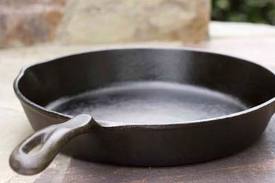
Cast Iron Skillet

I love my cast iron skillet. But I must say, it was not love at first sight- I had to learn to live with it, and adapt to its whims and needs.
When the skillet first came to my home, I had to idea how to treat it, and ended up burning the hell out of it. I had to scrub all the burnt skin off, and start over. I seasoned it with good old olive oil, since I didn't have any other oil at hand. Coated it with oil, inside and out, and baked it for about half hour in medium heat (350ºF). After the skillet was properly seasoned, it was ready for use. One can also follow the directions that come with the skillet, since each cook seems to have their own way of seasoning their cast iron pots and pans. Now that I have had my skillet for many many years, and we have gotten used to each other, when I am done cooking with it, I usually either rinse it in cold water (if the skillet has cooled down), or pour boiling water inside it (when it is still very hot)... and either just swish the water around or/and scrape it with a spatula (metal or wood- never plastic!!!) to rinse it. I never use soap on it, because it will break down the oil coating. Then I throw the (dirty) water out, put the skillet back on the stovetop, and put the fire on low for a few minutes to dry it up - learned that with my mother. When it is almost dry, I turn the fire off, let it cool down a bit, and put a bit of olive oil on the inside of the skillet again, to keep it nicely seasoned. The whole cleaning/drying/oiling takes just a few minutes; I do it while I wash the rest of the dishes, so it is a no-brainer. In that respect, the cast iron skillet is far superior than the Teflon ones. You can scrape it and heat it as much as you want, you will never have to worry about toxic fumes and/or lethal scratches.
I use my skillet for sauteing bacon that goes into the black beans. I saute all kinds of greens in it, with olive oil... I also use it to brown any meat that I may need to brown for a stew... to fry eggs... corn bread... warm up tortillas... make pancakes... and always, always use it to make "Tortillas", also known as Spanish Omelettes. Those omelettes are thick, with potatoes and onions inside them; so they must not only cook on the stove top at first (in order to saute and brown the potatoes and onions), they need to go into the oven in order to actually cook the egg/milk mixture. The cast iron skillet is the only pan that is capable of doing that job without any injuries to itself- or the cook.
The only thing to remember, when cooking with it, is: always warm up the pan first (in medium, or medium-high heat), and then put your oil of choice in it (to cook your food) when the pan is nice and hot. Otherwise, chances are you will burn the oil! Warm the skillet up, throw the oil in, then immediately throw in the food to cook. If it is bacon, of course, chances are you won't need to put in any oil- the bacon will take care of itself. I am talking about real bacon, though, not some turkey imitation nonsense. Warm the skillet in medium heat for everything other than sauteed greens, in which case you will want high heat because that is the nature of the cooking. But keep an eye on it so you don't burn that hell out of your greens. Do not cook tomatoes in your cast iron skillet; tomatoes react and pick up the flavor of the iron; having said that, do not leave the cooked food in the skillet for very long either, because it will pick up that flavor as well- not so much a bread item, but definitely greens. Happy cooking!

Note from a reader: "I'm going to be a heretic and say that once you've got it good and broken in, no special care is needed. I've got a 12" pan that's over 30 years old and I abuse it as badly as I can and it's still doesn't stick. I've also got my Granny's 16" pan that she used for frying chicken that goes all the way back to the 1920's and it's still in great shape. When I got her pan, it had a couple of nasty rust spots on it, so I thought it was done. I ground out the rust, started using it and after several uses it came back. I wash them with soap and then usually dry them on the stove. It's probably faster to season it in the oven with oil, but once the pores get clogged up and worn down smooth, it'll be good to go."

The Farmers Are Back!

We were finally able to go to the farmers market today, and purchase local produce. Down To Earth and KYV farms joined forces, and had a whole array of vegetables to offer: Kabocha and Calabaça squashes, Zuquini, Yellow Squash, Sweet Potatoes, Green Beans, Cucumber, Bok Choi, Okra and flowers from their fields. I took a folding shopping cart, and filled it with vegetables for $26. All local, fresh, organic. No middle man, no cross-country trip, no packaging, and best of all: you can still see the dirt on the vegetables, and know exactly where that dirt comes from: Jacksonville.

10/20/10

More on Chia Seeds

"The chia seed is an excellent source of fiber and is loaded with vitamins and minerals, specifically high in calcium. Chia seeds are packed with antioxidants, contain 7 grams of protein per 2 tablespoons, and are the richest known source of the essential omega-3 fatty acid. Although few studies have been published, preliminary literature suggests the soluble fiber in chia seeds can help decrease blood pressure and blood sugars. Chia seeds have also been known to aid with running and athletic performance requiring hydration. Their unique ability to absorb nine times their weight in water can prolong hydration and retain electrolytes. Chia seeds can be sprinkled in oatmeal, yogurt, soup, smoothies or even added to a favorite recipe."
Jodi Brindisi, RD, LDN, is a registered pediatric dietitian with Baptist Medical Center and Wolfson Children's Hospital.

10/18/10

Waldoch Honey


This is the honey from Mr. George Waldoch, of Waldoch Honey. I had previously posted about him (April 20, 2010), but never had a chance to make it to his house, down in Julington Creek. I finally had some free time today, so I decided to bike to his house and buy some honey. I ended up buying a gallon of it... a hell of a bike ride home. When I got back, I weighted it just for kicks... 13 pounds. Here is a Times Union article on Mr. Waldoch, as well as a link to Mr. Waldoch in action:
Feeling the buzz: George Waldoch's love for bees goes back more than 80 years. By Liz Van Hooser
It was 1925, and George Waldoch was 6 years old. In his family, this made him old enough to help his older brother tend to the beehives on their farm in Minnesota. Life's twists and turns would take him into the Navy during World War II; he'd sell sewing machines door to door in Jacksonville; he'd have four children and eventually lose a daughter followed by his wife, Ruth.
But through it all, Waldoch tended to his bees — dozens of hives at a time. The hobby has helped bring in extra income, and he's still at it at as he approaches his 90th birthday next month.
Waldoch, who lives in Mandarin, keeps hives in several locations. He currently has 120 in rural Brevard County. Although he's been working with the insects for more than 80 years, Waldoch said he's still learning new things about them. He shared a few of those lessons about bees and honey:
• Waldoch believes bees can sense if you're scared of them and are more likely to sting if you're wary. He never works with netting but tries to bring a pleasant attitude to the bees. Sometimes, he gets no stings at all. Other times, he'll get 20 or 30. If a bee is flying in your direction, Waldoch recommends you don't tense up. If a bee lands on you, don't slap it into your skin. You'll get stung. Instead, grab it between your fingers and roll it around until it's crushed.
• Waldoch doesn't recommend eating imported honey. Local bees make their honey by taking nectar (and some bits of pollen) from local blossoms. Some say that when you eat out-of-town honey, you lose the immune system benefits of honey. Allergists regularly recommend trying local honey to see if it helps relieve allergies.
• There are several kinds of honey made in Florida. The varieties take their flavor cues from the blossoms the bees feed on. Some of the most common plants bees thrive on here are Brazilian peppers, cabbage palm, gallberry, saw palmetto, orange trees and white tupelo. Waldoch's favorite kind of honey is made from saw palmetto plants.
• Waldoch says a bee sting doesn't hurt much. Scorpions, which like to hang out in beehives, are a different story. Waldoch was bitten by one on his ring finger. It became so swollen that he had to have his wedding band cut off. (He later had it soldered back together and still wears it.)
• The average beehive has 30,000 bees and can produce 9 gallons of honey a year. Waldoch says hives are smaller today than they were 50 years ago. He blames mites and beetles that prey on the bees, as well as fewer people raising them.
• Bees don't sleep.
• Waldoch eats honey every day, usually on cereal or with a piece of cheese. He doesn't get people who drizzle honey on pancakes, though.
liz.vanhooser@jacksonville.com

Jamie Oliver shows kids what Chicken Nuggets are made of

Corporate takeover of organic egg market

This video describes in a very clear manner what the movie "Food Inc" touched a little bit on, and what Michael Pollan writes about in detail in "The Omnivore's Dilemma" and "In Defense of Food"), regarding the organic egg industry. When it comes to chicken and eggs, organic is not enough. You definitely need to know which farm they are coming from, how their living conditions are, and what they are fed.

10/16/10

Whole Story

The Official Whole Foods Market BlogCelebrate Non-GMO Month

October 2010 is our first (and hopefully annual) Non-GMO Month, an event that introduces and celebrates the “Non-GMO Project Verified” seal, a first-of-its-kind certification program that Whole Foods Market fully supports. The appearance of this seal marks a major milestone in the course of many years of hard work for those of us in the natural and organic industry.
I’ve written about the Non-GMO Project on this blog once before, when we announced our strong support of the initiative and its seal. Now I’m extremely happy to announce that the actual seal is on actual products in many aisles of our stores!
Several years back, while developing a non-GMO standard for our private label products, we learned about a small group of retailers, co-ops and food makers who were doing the exact same thing that we were. They called themselves “The Non-GMO Project,” and we joined their effort because we knew that our goal – preserving the availability of Non-GMO food in North America – would have a much greater chance of success if we all worked together. The Non-GMO Project, working with industry leaders and technical experts, developed the first third-party certification program for products that avoid the intentional use of GMOs, which governs segregation and manufacturing practices along with testing and documentation protocols. Manufacturers who earn the use of the seal have to prove that they are doing everything they can to keep GMOs out of their products.
We know a large number of our shoppers want to avoid GMOs, for a variety of reasons, and we believe strongly in providing clear and transparent labeling for products that avoid GMOs. The Non-GMO Project is critical to our success in this effort, because it provides a common language for the entire supply chain – from seed growers to retailers – to use in verifying and identifying non-GMO food products. This strong standard give the seal great integrity and empowers growers, food makers, retailers and shoppers to make informed decisions based on reliable, verified information. It’s the first seal of its kind — the best seal of its kind — and we want to help make it into a powerful emblem for products whose makers have truly verified that they do everything they can to avoid GMOs.
Unfortunately, due to pollen drift in the field and cross-contamination, there’s virtually no such thing as completely GMO-free. However, the Non-GMO Project standards set thresholds and prescribe practices to ensure that the products bearing the seal are made without the intentional use of any GMOs, and that they follow a clear set of best practices to avoid cross-contamination.
In 2009, Whole Foods Market announce that we had enrolled our entire private label – all of our store brand products sold under the 365 Every Day Value and Whole Foods Market labels – in the verification program. You may have noticed that several varieties of our corn tortilla chips already have the Non-GMO Project Verified seal. Now, we’re celebrating the next batch of our private label products and products from our vendor partners to earn the seal. For a complete list of our products and those from other food makers, visit the Non-GMO Project Website. Stop by your local store to check out these products, and if you don’t see your favorite food maker on the list, let them know you’d like to see their products verified by the Non-GMO Project.


10/14/10

Cheese at Your Farmers Market!

Sweet Grass Dairy
Sweet Grass Dairy at Your Local Farmers Markets Saturday!


Dear Patrons,


Sweet Grass Dairy will be at the Riverside Arts Market this Saturday October 16th. We won't be at the market for November so this is your last chance to stock up on cheeses for Thanksgiving.


We've got some really exceptional cheeses for sale this Saturday. We've got one final batch of Lumiere and Canopy Road for the year. Also, there's a new cheese on the block: Lil' Smokey, a fresh cow's milk cheese blended with hickory smoked salt!

Lumiere
lumiere
Soft-ripened goat's milk cheese with French grapevine ash. Lumiere is our pasteurized, soft-ripened goat's milk cheese. Handcrafted in the style of cheeses from the Loire Valley in France, Lumiere is hand-dipped using small heart-shaped moulds. After salting, the cheeses are dusted with French grapevine ash to balance the acidity. Carefully turned each day, Lumiere develops its creamy interior and clean flavor.


Canopy Road
canopy road


Canopy Road is one of our pasteurized, soft-ripened, goat's milk cheeses.  The dry, chalky center becomes softer and more luscious as the cheese ripens, complimenting the tart citrus notes of the paste.


What to purchase at our booth:
Green Hill
Asher Blue
Cyprus
Thomasville Tomme
Eden
Lumiere
Canopy Road
Lil' Smokey


Riverside Arts Market
A weekly arts & crafts market on the Riverwalk under the canopy of the Fuller Warren Bridge.
Google Maps

We can't wait to see you there!
Sincerely,
The Sweet Grass Dairy Team

Sweet Grass Dairy
19635 US HWY 19 N
Thomasville, GA 31792
229.228.6704
www.sweetgrassdairy.com